Your buyer is ready. The offer is signed. Then your conveyancer mentions municipal arrears, and suddenly your sale timeline looks shaky. This catches out more South African sellers than you'd think, especially when accounts quietly build up over months without anyone noticing. If you owe your municipality money, the transfer of your property cannot register until that debt is sorted out. It isn't a suggestion. It's the law. Here's what a rates clearance certificate actually covers, how far back the municipality checks your account, and what it will cost you before your sale can close.
What is a rates clearance certificate, and why can it stop your sale?
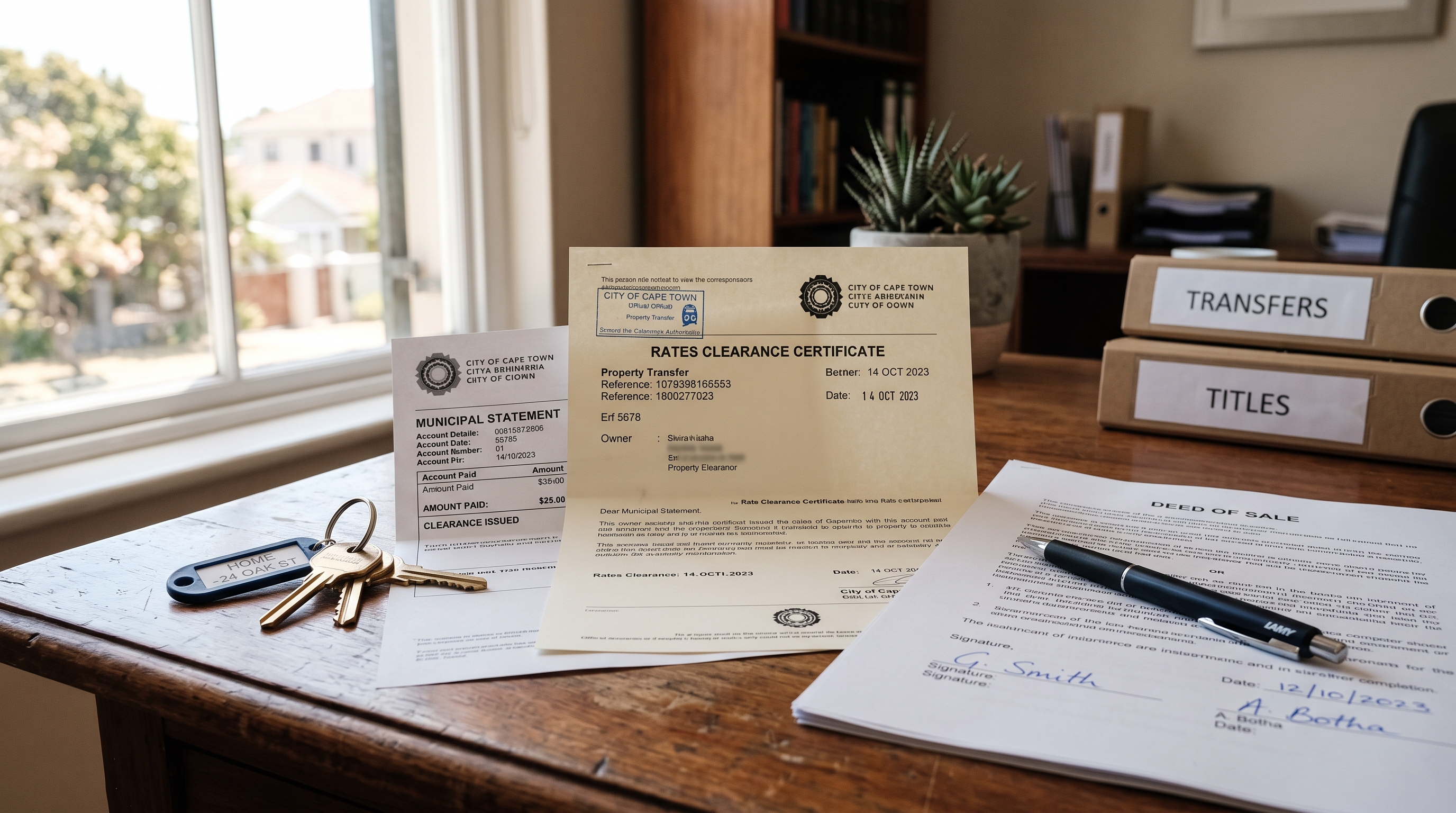
A rates clearance certificate is proof from your municipality that every rand you owe on rates, water, electricity, sewerage and refuse has been settled. Section 118(1) of the Municipal Systems Act makes this compulsory, and the certificate must be lodged at the Deeds Office.
The Registrar of Deeds simply won't register a transfer without it. Your conveyancer can have every other document in perfect order, but if the rates clearance certificate is missing, the sale sits and waits. No certificate, no transfer — it really is that blunt.
How far back does the municipality check my account?
The municipality looks at the last two years of your account, covering rates, electricity, water, sewage, refuse and any other municipal charges. It also adds an estimate to cover you through the transfer period itself, since the account keeps running while paperwork moves.
There's a small mercy here. Debt older than two years doesn't block the transfer. It stays your personal liability, and the council has to chase it separately rather than holding your sale hostage for it. That debt won't vanish, but it won't sink your deal either.
How much must I pay upfront for the certificate?
Municipalities want more than your arrears cleared before they'll issue anything. They also ask for an advance payment, typically two to six months of rates and services, before the rates clearance certificate gets released. The exact period depends entirely on where your property is registered.
Cape Town works on a four-month advance as standard. Johannesburg, Tshwane, Mangaung — which covers Bloemfontein — and eThekwini follow a similar approach, though the figure shifts from council to council. Ask your conveyancer to request the clearance figures early, because once issued, the certificate is only valid for 60 days.
What if I can't afford to settle the arrears?
You're not stuck if the cash isn't sitting in your account right now. Bridging finance covers the shortfall as a short-term loan, and your conveyancer repays it directly from your sale proceeds once the transfer registers at the Deeds Office.
This is a well-worn route in the South African property market, not some last resort. Mention it to your agent or conveyancer before your home even goes on the market, so there's no scramble once an offer lands.
The 5 costs every seller needs to budget for
Municipal arrears are just one line item. Here's the full spread of costs a seller needs to plan for before transfer day:
- Bond cancellation fees — Most banks want 60 to 90 days' written notice before cancelling your home loan. Miss that window and penalties follow, so notify your bank the moment your property is listed.
- Municipal account clearance — Settle all outstanding charges plus the advance payment before the certificate is issued. Budget two to six months of rates and services, depending on your municipality.
- Special levies — Own a sectional title unit or a home in an HOA? Expect to pay roughly three months' levies upfront. Confirm the figure with your body corporate before listing.
- Compliance certificates — Electrical, plumbing, gas, electric fence, and in some coastal towns, an entomologist's certificate. If an inspection turns up defects, fixing them is on you.
- Tenant deposits — If the property is tenanted, the full deposit plus interest goes back to the tenant when they leave, and you may face repair or cleaning costs after they go.
Frequently Asked Questions
Can I sell my property if my municipal account is in arrears? Yes, but the arrears need to be settled before the transfer can register. Your conveyancer applies to the municipality for clearance figures, and once the outstanding amount plus the advance payment is paid, the certificate is issued and the sale can proceed to registration.
Will the buyer inherit my municipal debt? No. The rates clearance certificate exists precisely to stop that from happening — it confirms the debt is cleared before ownership changes hands. Anything older than two years falls outside this process and stays your personal liability, not the buyer's.
How long does it take to get a rates clearance certificate? It varies by municipality and depends on how quickly your conveyancer submits the application and how fast the council processes it. Once fees are paid, most councils issue the certificate within days to a few weeks, and it stays valid for 60 days.
What is bridging finance in a property sale? It's a short-term loan that covers costs like municipal arrears or the required advance payment before your sale proceeds are released. Your conveyancer arranges repayment directly from the proceeds once the transfer registers, so you're not paying it back separately.
Does municipal arrears affect what I receive from the sale? It doesn't touch the sale price, but it does eat into your net proceeds. Arrears, advance payments, bond cancellation fees, compliance costs and commission all come off the top, so ask your conveyancer for a proper cost breakdown before you sign anything.
A municipal account in arrears doesn't have to wreck your sale — it just needs handling early. The rates clearance certificate isn't optional under South African law, and the costs around it can catch you out if you leave things to the last minute. Once you understand what the municipality checks, what it costs, and where bridging finance fits in, you're in control of your own timeline.
Contact me today and I'll walk you through exactly what your sale needs, step by step, so nothing catches you off guard on transfer day.
Tags:municipal arrears · rates clearance certificate · selling property South Africa · property transfer costs · Bloemfontein property · Mangaung Metro · conveyancing South Africa · bridging finance
Share this article