Home Deposits in South Africa: What Buyers Need to Know Before You Sign
Planning to buy in Bloemfontein? Learn how much home deposit you actually need in South Africa, where the money goes, and how to save R100k in two years.South Africa's home deposit rules aren't one-size-fits-all: some first-time buyers qualify for a 100% bond, while others must pay a deposit set by the seller in the offer to purchase. A typical deposit runs 10% to 20% of the purchase price, held safely by the transferring attorney until registration, and a bigger deposit generally means lower repayments and stronger negotiating power.
If you're staring down your first offer to purchase in Bloemfontein and wondering whether you need a home deposit at all, you're not alone. Banks have loosened up on 100% home loans to help first-time buyers get onto the property ladder, which is good news if your savings account isn't quite where you'd like it to be. But some sellers still insist on a deposit before they'll consider a deal final, and a deposit still does real work for you even when it isn't compulsory: it can improve your chances of bond approval, lower your monthly instalment, and give you more room to negotiate. Here's how it actually works.
How Much Deposit Do You Actually Need to Buy a House?
Most South African buyers put down between 10% and 20% of the purchase price, though it's possible to qualify for a 100% bond with no deposit if your credit record and income support it. On a R1 million home, that's typically R100 000 to R200 000, though you can negotiate a smaller amount or pay more if you have it.
The figure depends on your credit score, your income relative to expenses, and whether the seller insisted on a deposit in the OTP. Whatever you put down, there are separate bond and transfer costs, usually 10% or more of the price, payable regardless. Buyers who forget these are often caught off guard.
Do You Have to Pay a Deposit If You Qualify for a 100% Bond?
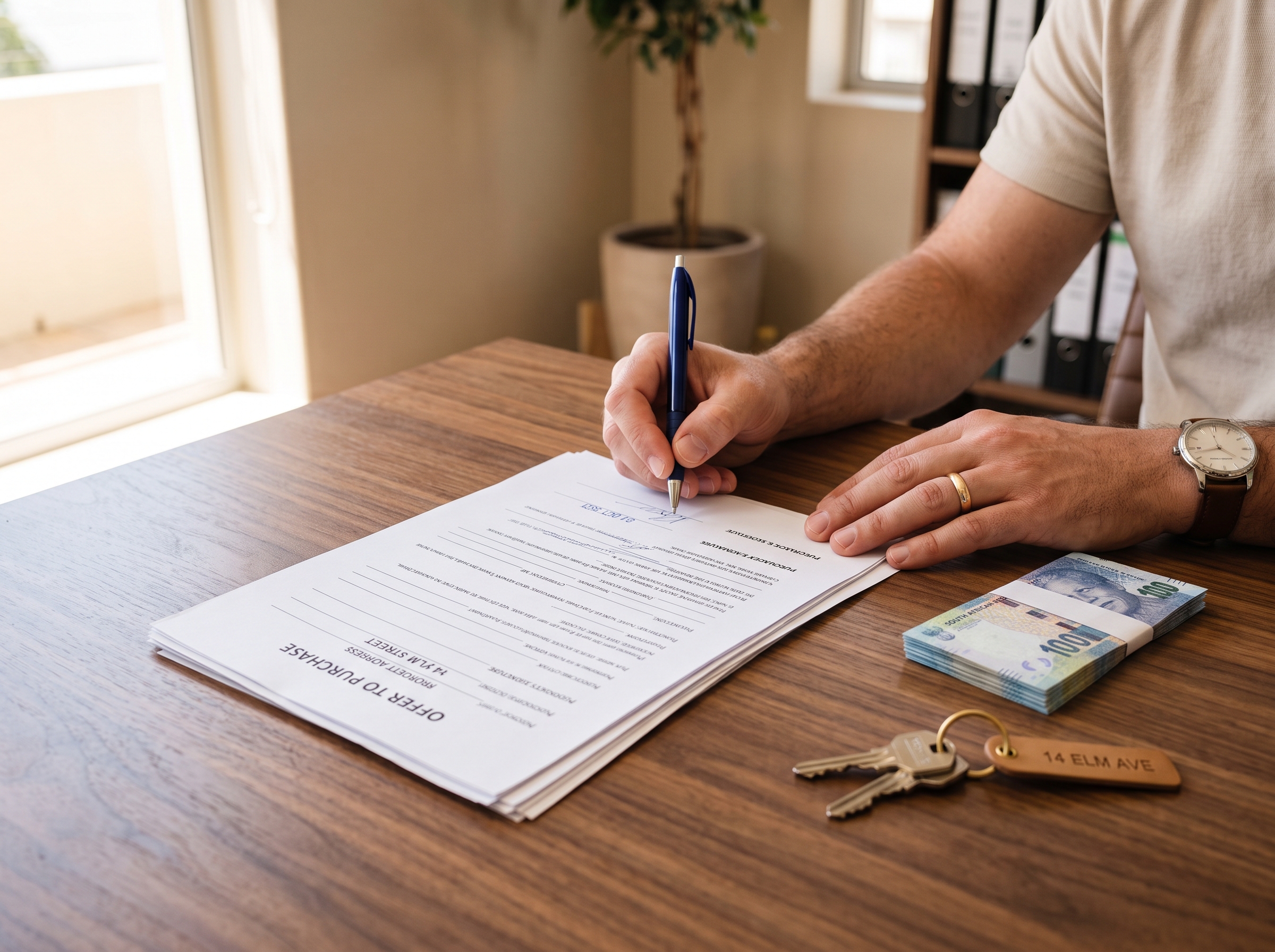
Not necessarily. Banks now approve 100% home loans for many first-time buyers, meaning no deposit is required to qualify for finance. But the offer to purchase is a separate agreement, and some sellers still insist on a deposit as a condition of sale, in which case the deal won't proceed until it's paid, regardless of what your bank has approved.
This is one of the most common places first-time buyers get caught out: they assume a 100% bond means zero cash upfront, then discover a deposit clause buried in the contract. Sellers ask for a deposit for one reason, it signals that you're serious and can complete the purchase. If two buyers make similar offers, the one with a deposit ready usually wins.
What a Bigger Deposit Actually Buys You
A larger deposit does more than reduce the amount you borrow. It changes the shape of the whole loan.
- Lower monthly bond repayments, since you're financing a smaller amount
- Less interest paid over the full term of the loan
- Stronger negotiating position on your interest rate, because the bank carries less risk
- Better odds of approval if your income is on the tighter side
- A more attractive offer if you're competing against other buyers
Paul Stevens, CEO of Just Property, makes the case for patience here: deferring the purchase by a year or two to build a bigger deposit reduces both what you borrow and what you pay over the life of the bond. It's not the answer every buyer wants, but the maths holds up.
Where Does Your Deposit Go Once You Pay It?
Your deposit doesn't go to the seller. It goes to the transferring attorney, who places it in a trust account and holds it there until the property is registered in your name. Interest earned on that money is paid out to you after registration.
This isn't a loose arrangement. Property practitioners handling trust money are regulated under the Property Practitioners Act 22 of 2019, which requires every non-exempt practitioner to keep a dedicated trust account and deposit client funds into it immediately. The PPRA oversees compliance, and the Property Practitioners Fidelity Fund exists to reimburse buyers if a practitioner steals trust money. Ask your attorney which account your deposit sits in, and get written confirmation once it's paid.
What Happens to Your Deposit If the Sale Falls Through?
If your offer to purchase was conditional on bond approval and the bank turns you down, your deposit is refunded in full. That's the protection the suspensive condition is designed to give you.
But if you withdraw from the deal for reasons outside that condition, or breach the contract and can't fix the problem in time, you risk forfeiting the deposit. The offer to purchase is a binding contract, not a soft commitment, and the seller can use a forfeited deposit to cover legal costs when a deal collapses. Read the suspensive conditions carefully before you sign.
A Realistic Plan to Save R100 000 in Two Years
If a 10% deposit on a R1 million home feels out of reach right now, the maths is less intimidating than it looks. Saving R100 000 over two years works out to roughly R50 000 a year, or about R4 200 a month.
A few practical shifts can get you there:
- Pay the R4 200 into savings at the start of the month, not whatever's left over
- Use a call account that pays decent interest but makes withdrawals slightly inconvenient
- Cook at home more, and batch-cook once a week to cut electricity use too
- If you're a two-car household, consider whether you need both, especially working from home
- Review insurance premiums on vehicles and electronics for outdated valuations
- Bank bonuses and commission straight into savings, keeping only a small cut for yourself
None of it is glamorous. But two years of tighter spending against a lifetime of lower bond repayments is a trade most buyers say was worth it.
Common Mistakes That Sink a Home Loan Application
Banks assess affordability by weighing income against declared expenses, so how you complete that section matters. The most common error is duplication: if you prepay into a card that covers groceries and petrol, don't list those again separately. Couples applying together should only have one person declare shared costs like rent and electricity.
Dishonesty is the second trap. Banks cross-check expenses against six months of bank statements, so mismatches are easy to spot. Be honest about needs versus wants too, educational costs for dependants are needs, takeaways and movie nights are wants, and inflating that category makes you look riskier than you are.
A home deposit in South Africa isn't just a hoop to jump through, it shapes your monthly repayment, your interest rate, and how attractive your offer looks to a seller. Whether you're aiming for 10%, 20%, or working toward a 100% bond, understanding where your money goes and what protects it puts you in a stronger position at the negotiating table. If you're buying in Bloemfontein or anywhere in the Free State and want a second opinion on your offer to purchase before you sign, contact me today and I'll walk you through it.
Frequently Asked Questions
How much deposit do I need for a house in South Africa?
Most buyers pay between 10% and 20% of the purchase price, though 100% bonds are available to qualifying first-time buyers. On a R1 million property, expect to budget R100 000 to R200 000 if a deposit is required, plus separate bond and transfer costs.
Can I buy a house in Bloemfontein with no deposit?
Yes, if your bank approves a 100% home loan based on your credit record and affordability. However, some sellers still require a deposit as a condition in the offer to purchase, so check the contract terms before assuming you won't need cash upfront.
Is my deposit paid directly to the seller?
No. Your deposit is paid to the transferring attorney, not the seller, who holds it in a regulated trust account under the Property Practitioners Act 22 of 2019 until the property is registered in your name. Interest earned on the deposit is paid out to you once registration is complete.
What happens to my deposit if my home loan is declined?
If your offer to purchase was conditional on bond approval, a declined application means your deposit is refunded to you in full, since the suspensive condition protects you. If you withdraw for other reasons or breach the contract and can't fix it in time, you risk forfeiting the deposit.
Does a bigger deposit get me a lower interest rate?
Often, yes. A larger deposit reduces the amount of risk the bank is carrying on the loan, which can strengthen your position when negotiating your interest rate. It also lowers both your monthly instalment and the total interest you'll pay over the full term of the bond.
Tags:home deposit · home deposit South Africa · offer to purchase · 100% home loan · bond approval · Property Practitioners Act · first-time home buyer · Bloemfontein property · Mangaung Metro · transferring attorney trust account
Share this article