Documents Needed to Sell a House in South Africa: Your Bloemfontein Checklist
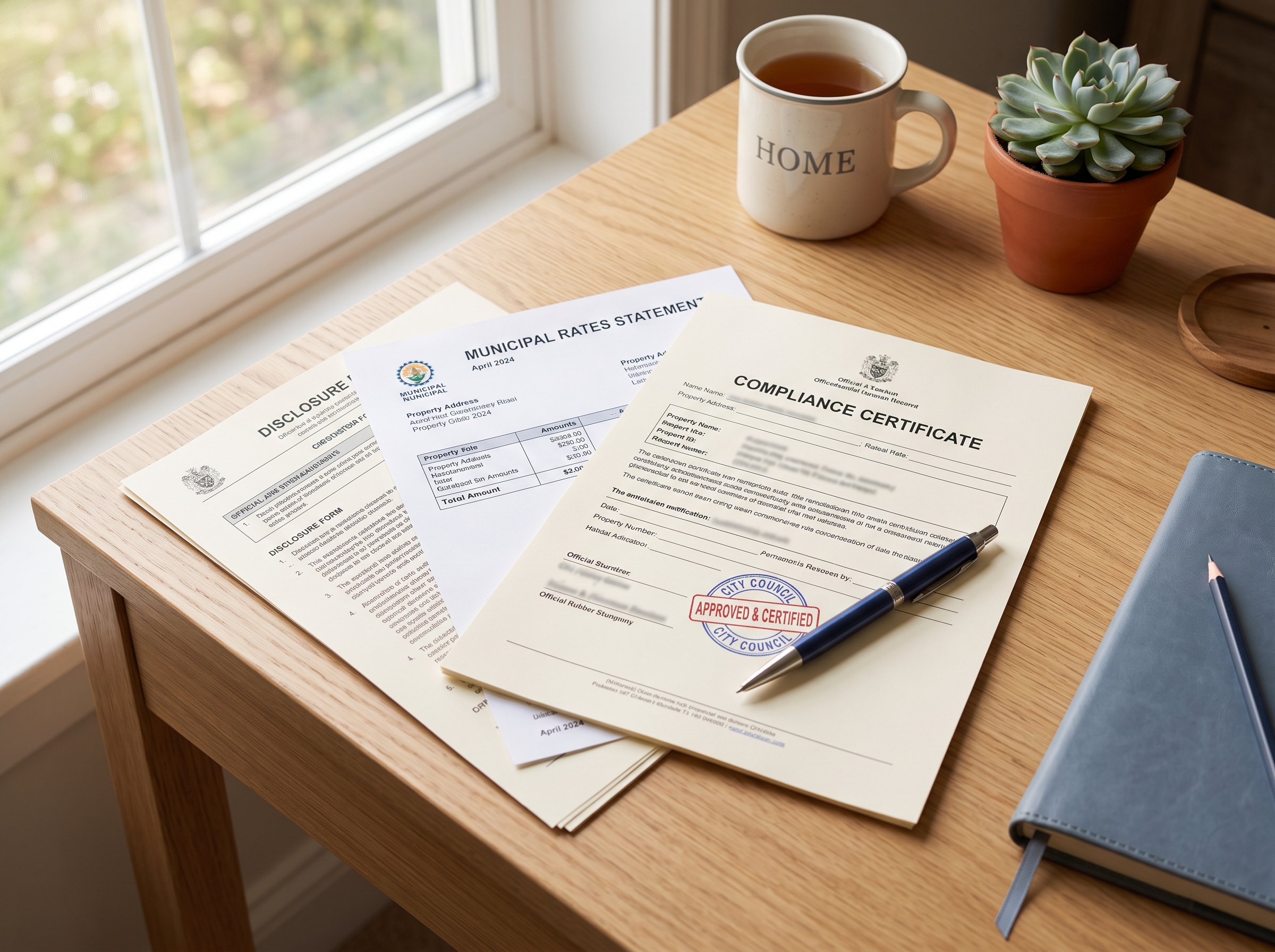
Selling a house in South Africa means gathering more than just a title deed. You need a signed mandatory disclosure form before your agent can even list the property, a municipal rates clearance certificate, compliance certificates for electrical and plumbing work, and proof of any approved building plans. Sectional title sellers also need to hand over scheme rules. Getting these documents ready early avoids delays at the deeds office.
Every seller in Mangaung hits the same wall at some point: the buyer's attorney or the deeds office asks for a document nobody warned them about. Knowing the documents needed to sell a house in South Africa before you list — not after you get an offer — saves weeks of back-and-forth. The Property Practitioners Act 22 of 2019 now makes one form non-negotiable before an agent can even market your Bloemfontein home, and municipal, compliance, and scheme paperwork follow close behind. Here's what to have ready, why it matters, and where sellers in Universitas, Langenhoven Park, and Fichardt Park most often get caught out.
What documents do you need to sell a house in South Africa?
At minimum, you need a signed mandatory disclosure form, a municipal rates clearance certificate, compliance certificates for electrical and plumbing work, approved building plans (or proof you're addressing unapproved changes), and — if applicable — sectional title scheme rules and a levy clearance statement. Your conveyancing attorney will also need your ID and the property's title deed.
Most sellers underestimate how many separate offices are involved. Your agent, your municipality, an accredited electrician, and your conveyancing attorney all need something different from you, often at the same time. Getting organised early is the single biggest thing that keeps a sale on schedule.
A practical starting checklist for a Bloemfontein seller looks like this:
- Signed mandatory disclosure form
- Copy of your ID and the property's title deed
- Municipal rates clearance certificate
- Electrical compliance certificate (plus gas, fencing, or plumbing certificates where relevant)
- Approved building plans, or a plan to regularise anything unapproved
- Sectional title conduct rules and levy statement, if applicable
Why the mandatory disclosure form comes first
Since the Property Practitioners Act 22 of 2019 came into effect, a property practitioner may not accept a mandate to sell your home until you've completed and signed a mandatory disclosure form. Skip it, and the law treats the sale as if no defects were disclosed at all — leaving you exposed to a claim months after transfer.
The form asks you to declare anything a buyer would reasonably want to know: roof leaks, damp, structural cracks, unapproved additions, or problems with the pool pump. It feels tedious, but it protects you as much as it protects the buyer. A properly completed disclosure form is your strongest defence if a dispute lands on your desk after registration.
Rates, taxes and the municipal clearance certificate
As the seller, you're required to pay roughly three months of rates and other municipal charges upfront before the property can be re-registered in the buyer's name. This covers the municipality while the transfer is processed. Whatever's left over once the sale registers gets refunded to you.
In Mangaung, this step can take longer than sellers expect, particularly if there are outstanding queries on your municipal account. It's worth requesting a statement from the municipality as soon as you decide to sell, rather than waiting until your conveyancing attorney asks for it.
Compliance certificates: electrical, plumbing, gas and fencing
An electrical compliance certificate is a near-universal requirement, confirming your home's wiring meets current safety standards. Depending on your property and municipality, you may also need certificates covering electric fencing, gas installations, or plumbing and water systems.
These certificates have to be issued by an accredited contractor, not just any handyman, and they're only valid for a set period. If yours has expired, or you've never had one done, book an inspection well before you list. Repairs flagged during the inspection can take a few weeks to sort out, and that delay lands right in the middle of your sale if you leave it too late.
Selling in a sectional title scheme? Don't forget the rules
Sectional title sellers carry an extra layer of paperwork. Buyers are entitled to see the scheme's conduct rules before they commit — covering things like pets, parking bays, noise, and whether they can repaint a door without asking. Your body corporate or managing agent should be able to provide these on request.
You'll also need a levy clearance certificate confirming your monthly levies are paid up to date, along with details of the body corporate's financial position. A buyer's attorney will usually ask for this early in the process, so it's worth requesting it from your trustees or managing agent as soon as you list.
Special levies: who pays what, and when
If your body corporate raised a special levy — for a paint job, a boundary fence, or a lift repair — you remain liable for it up to the date of registration. From registration day onward, the new owner takes over. Sellers who forget to mention a pending special levy often face awkward conversations at the last minute.
It's far better to raise this with your agent and the buyer upfront than to have it surface during due diligence. Transparency here tends to keep negotiations calmer and avoids a last-minute price argument over who owes what.
Solar panels, water tanks and other fixtures
Solar panels and rainwater tanks are treated as fixtures once they're bolted, wired, or plumbed into the property, which means they legally stay with the house unless you say otherwise in writing. This catches out a surprising number of sellers who assume they can take a system they paid for out of their own pocket.
If you intend to remove solar panels, a geyser, or any other fitted system before handover, this needs to be spelled out clearly in the Offer to Purchase before both parties sign. Once the agreement is signed without that clause, the fixture legally belongs to the buyer.
Frequently Asked Questions
What happens if I sell without a disclosure form?
Legally, an agent can't accept your mandate without it, so in practice most sales won't reach this point. But if a disclosure form is missing or unsigned, the law treats your sale as if you disclosed no defects at all — meaning any hidden fault the buyer later finds could become your liability, even after transfer.
How much rates money must I pay upfront when selling?
Municipalities generally ask for about three months' worth of rates and other charges before they'll issue the clearance certificate needed for registration. It's a deposit, not an extra cost — any unused portion comes back to you once the transfer has gone through and the municipality has settled its account.
Which compliance certificates do I need in Bloemfontein?
Requirements vary slightly by municipality, but Mangaung sellers typically need an electrical compliance certificate, and — where applicable — certificates for electric fencing, gas installations, and plumbing or water systems. Check with your agent early, since booking an inspector and completing any repairs can take longer than sellers expect.
Who pays a special levy raised before the sale?
You do, up until the date the property registers in the buyer's name. It doesn't matter when the levy was announced — if it was raised while you still owned the unit, it's your responsibility. From registration day, the new owner picks up any future special levies.
Can I sell my solar panels separately from the house?
Not by default. Solar panels and rainwater harvesting tanks are treated as fixtures once installed, meaning they're legally part of the property and stay with it. If you want to take them with you, that has to be stated clearly in the Offer to Purchase before both parties sign.
Getting the documents needed to sell a house in South Africa sorted before you list isn't paperwork for its own sake — it's what keeps your sale moving instead of stalling at the deeds office. Start with the disclosure form, sort your municipal clearance early, and get compliance certificates booked before you have a buyer, not after.
If you're planning to sell in Bloemfontein or anywhere across Mangaung, contact me today and I'll walk you through exactly what your property needs before we put it on the market.
Tags:documents to sell a house · mandatory disclosure form · Property Practitioners Act · rates clearance certificate · compliance certificate · sectional title selling · Bloemfontein property · Mangaung real estate
Share this article