By Louise Fourie, PPRA registered property practitioner, Africa Estate Properties. Updated 2 October 2026
Dinokeng at a glance
Dinokeng is the only Big Five game reserve in Gauteng and the only one inside a metropolitan boundary: a malaria-free reserve of about 21 000 ha, 45 minutes north of Pretoria, made up of privately owned land. That combination of wildlife, distance and private title is what makes it unusual, and what buyers pay for.
| Fact | Detail |
|---|---|
| Status | Gauteng's only Big Five reserve. Lion, leopard, elephant and buffalo were reintroduced first; black rhino arrived in 2018, completing the Big Five |
| Size | About 21 000 ha, with plans to grow to 40 000 ha |
| Ownership | Around 180 private landowners, most on portions of about 21 ha, in a public-private partnership with the Gauteng government |
| Opened | September 2011 |
| Distance | About 45 minutes from Pretoria and about an hour to 75 minutes from Johannesburg and O.R. Tambo International |
| Health | Malaria free |
| Visitors | 106 653 paying visitors in 2025; up 14% in January to July 2026 |
| Lodges | Around 80 lodges, employing 800 to 1 000 people |
| Game drives | A self-drive route of about 140 km, open 06:00 to 18:00 |
How the reserve works
When you buy in Dinokeng you buy freehold land with your own title deed, inside a reserve that is run jointly; you own the ground, and you share the wildlife, the roads and the security with everyone else.
- A public-private partnership. Private landowners and the Gauteng government built the reserve together. Landowners kept their land and agreed to drop internal fences so that game can move freely across it.
- Your own fenced area. Owners typically keep a small fenced area for their homestead or lodge, often around 10% of the property; the rest is open to the reserve. Ask what is fenced on the property you are looking at, and why.
- Management and contributions. The reserve is managed by a landowners' management association. Tourism income does not yet cover all running costs, so landowners contribute. Ask the reserve office for the current annual contribution and any levies before you make an offer.
- Gates and access. Visitors enter through the reserve's gates, open 06:00 to 18:00. Gates are cashless and fees are usually bought online.
- Conservation fees (from 1 July 2026). South African adults pay R100 a day, or R100 a night as overnight guests of external lodges; children R50; international adults R200. Guests of participating lodges pay R85 a night. Overnight fees are capped at R340 per person per stay. A self-drive permit is R250 once off. These fees go to the reserve, not to the lodge, but every guest weighs them.
- Protection and growth. The reserve is applying for proclamation as a protected area under the Protected Areas Act, with about 90% of landowners in favour, and aims to double in size to 40 000 ha. 964 ha of provincial public works land is waiting to be added and 12 000 ha of army land is under discussion.
Visitors and tourism growth
Paying visitors to Dinokeng have grown every year since 2023 and are still growing in 2026, which is the single best sign for anyone buying a lodge or guest property here.
| Period | Paying visitors | Change |
|---|---|---|
| 2023 | 89 677 | |
| 2024 | 99 887 | +11.4% |
| 2025 | 106 653 | +6.8% |
| January to July 2026 | 67 412 | +14% on the same months of 2025 |
The reserve's general manager describes the growth as steady and consistent, and established lodges are adding new seasonal products (Tourism Update, 25 September 2026).
The national picture supports it. South Africa received about 10.5 million international tourists in 2025, the highest on record (The Presidency, February 2026), and arrivals rose another 12.3% in the first half of 2026, with the United States the largest overseas market (ATTA, July 2026). For an international visitor with a short stay, a Big Five reserve an hour from Johannesburg's airport is one of the easiest safaris in the country to reach.
What property sells for
Most property in Dinokeng is a portion of about 21 ha, and what sets the price is what stands on it: bare land asks under R2 million, a home on 21 ha R3 million to R5 million, and an operating lodge R4 million to R34 million. Buyers have choice: Property24 shows 57 farms and lodges for sale in the reserve, several marked reduced.
| Type | Asking prices, October 2026 | Examples |
|---|---|---|
| Vacant land, about 21 ha inside the reserve | About R1.7 million | One 21 ha portion in the Big Five section at R1.7 million (R80 952/ha) |
| Home on 20 to 24 ha | R3.2 million to R4.8 million | 21.4 ha at R3.2 million (reduced); 24 ha on the river at R4.15 million; 22 ha at R4.8 million |
| Operating lodge on up to 50 ha | R4.2 million to R34 million, median R11.7 million | 21 ha bush camp at R7.8 million; 20 ha lodge with function hall at R9.4 million |
| Large farms, 177 to 889 ha | R23 million to R48 million | 637 ha at R37 million; 889 ha at R48 million |
| Adjacent or outside the boom gate | Noticeably cheaper | 42 ha just outside the boom gate at R2.6 million; 20 ha in the neighbouring Kwaggasdrift conservancy from R1.5 million |
These are asking prices, not sales. South African sellers accepted on average 8% less than asking in the third quarter of 2026 (FNB Estate Agent Survey), so treat every figure as a ceiling. For registered sales, ask an agent to draw the Deeds Office transfers in the reserve for the past 24 months.
Sources: Property24, Dinokeng farms and Private Property, Dinokeng, 1 and 2 October 2026.
Inside the Big Five fence, or outside it
A Dinokeng address does not by itself mean the property is inside the Big Five area, and that one fact can move the value of a 21 ha portion by millions. Listings for sale today include properties "just outside the boom gate" and "adjacent to the Dinokeng Big 5 area", and they ask noticeably less than comparable land inside.
What to establish for any property:
- Which side of the fence. Ask the reserve office to confirm in writing whether the property lies inside the Big Five area. Do not rely on the listing.
- Membership. Whether the property is part of the reserve's landowner agreement, and what the annual contribution is.
- Access. Which gate you use, the road condition from the gate to the property, and whether guests can reach it in an ordinary car.
- Your fenced area. How large the homestead or lodge fence is, whether it is electrified, and whether it has the required electric fence certificate.
- Game on the property. Inside the Big Five area, lion, elephant and buffalo can walk past your fence. That is the reason guests come, and the reason children, pets and staff housing need planning.
Running a lodge in Dinokeng
A lodge here competes on product and service, not on location alone: LekkeSlaap lists about 125 places to stay in or around the reserve, most of them small self-catering units. The operators who charge more sell a package, not a bed.
| Product | Example | Rate, October 2026 |
|---|---|---|
| Self-catering unit, room only | Ten places in the reserve | R400 to R2 625 a night, median about R1 150 |
| Bed and breakfast lodge | Kwalata Game Lodge, sleeps 57 | From R3 470 a night for two |
| Full board with game drives | Mongena; Nako Safari Lodge | From R2 743 and R4 400 per person sharing |
| Cultural village with rooms (outside the reserve, for comparison) | Lesedi, Lanseria, 38 rooms | R2 410 a room for two, room only |
Three things decide whether a lodge here pays its way:
- What you sell with the room. Breakfast, dinners, game drives, airport transfers and experiences lift the rate far more than a better bed.
- Groups and weekdays. Conferences, school and church groups, team building and functions fill the weekdays that leisure guests leave empty. National figures for guest houses show occupancy in the teens in quiet months (Stats SA), so a weekend-only lodge struggles.
- What you paid. In Dinokeng, buyers pay for land and buildings in a Big Five reserve and the lifestyle that comes with it. Lodge income usually helps carry the property rather than justify its price. Model it honestly before you buy.
Sources: LekkeSlaap, Kwalata, SA-Venues, Lesedi, lodge websites and LekkeSlaap listings, October 2026.
Risks to weigh
None of these is a reason not to buy in Dinokeng, but each belongs in your price and your plan; a guide that left them out would not be worth trusting.
| Risk | What is known | How to weigh it |
|---|---|---|
| Supply | 57 farms and lodges listed on Property24, several reduced or highly negotiable | You have choice; compare at least five properties and negotiate |
| Reserve finances | Tourism income grows about 10% a year but does not yet cover all running costs, so landowners contribute | Ask for the current contribution and how it has changed |
| Poaching | About 1 000 snares are removed a year; only three rhino-poaching incidents in 13 years, helped by horn trackers | Anti-poaching is funded partly by your contribution and guests' fees |
| Dangerous game | Two fatal lion incidents, in 2018 and 2023, are on the public record | Follow the reserve's rules; plan fencing, staff housing and guest walking areas |
| Hammanskraal | The town on the reserve's western edge has a long history of contaminated water and had a cholera outbreak in 2023. A national water programme with 67 boreholes and the Klipdrift plant was launched in July 2026 | Properties in the reserve run on their own boreholes: test yield and quality |
| Interest rates | Prime is 10.75% after two increases in 2026 | Lifestyle and lodge property is bought largely with equity; borrow conservatively |
Sources: Mail & Guardian, 4 July 2024 (reserve finances, snares, poaching), Property24 listings (supply), IOL (Hammanskraal water programme, 19 July 2026).
Due diligence checklist
Have these twelve answers in writing before you sign an offer; a good agent will gather most of them for you.
- Title deed, exact extent, servitudes and any bond, read by a conveyancer
- Written confirmation from the reserve office: inside or outside the Big Five area
- Landowner agreement, annual contribution and levies, and the reserve's rules
- Zoning and consent use from the City of Tshwane for how you intend to use it (home, lodge, conference, events)
- Approved building plans for every building
- Borehole yield and water quality tests, and any registered water use
- Eskom account, backup power and solar
- Sewage system: type, capacity and condition
- The 1 in 100 year flood line if the property is on a river, and whether any building is inside it
- Electrical, electric fence and gas certificates, needed for transfer
- The seller's completed mandatory disclosure form
- For a lodge: bookings, bank statements, staff contracts, inventory, and whether it is sold as a going concern (this decides VAT or transfer duty)
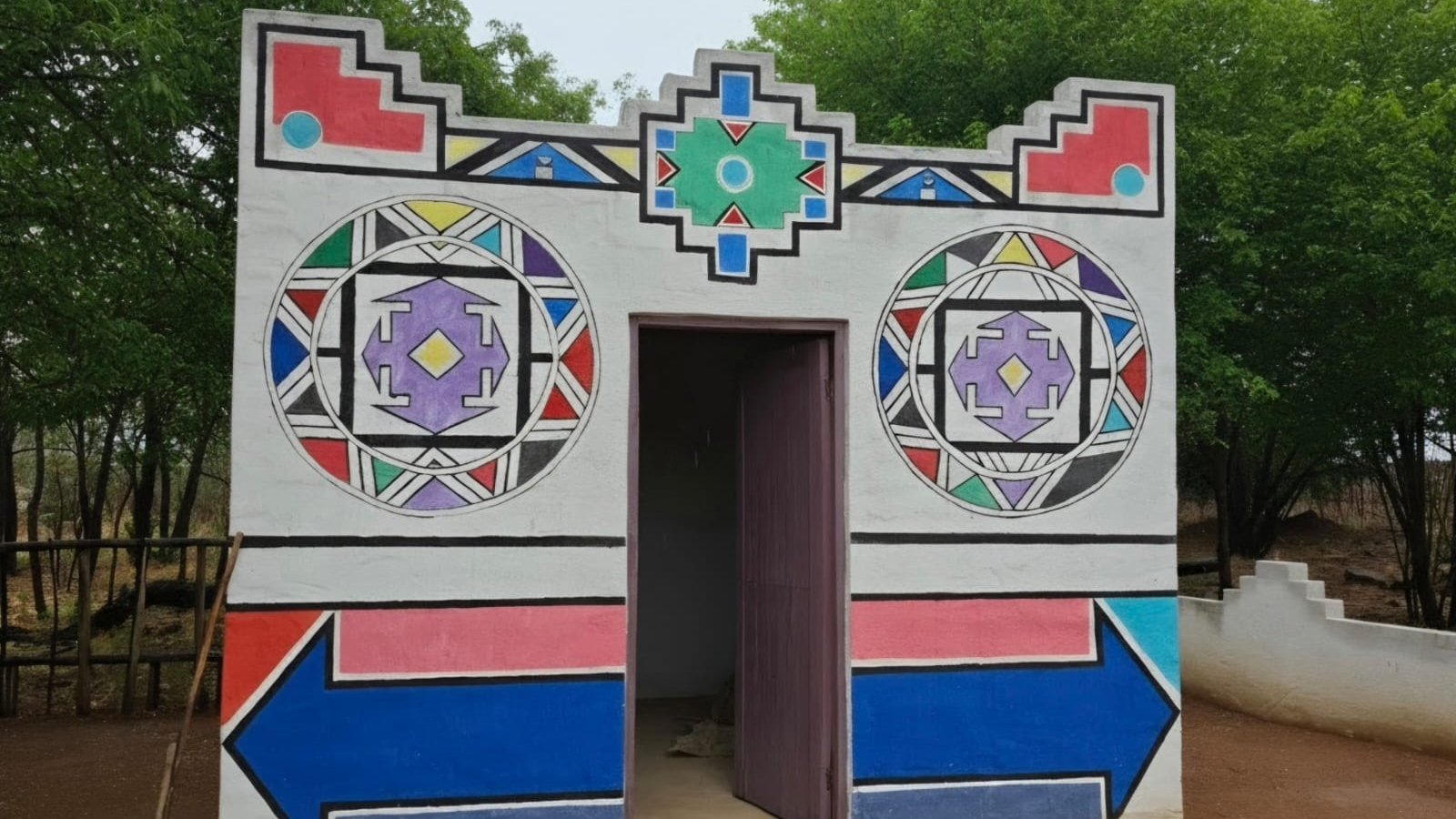
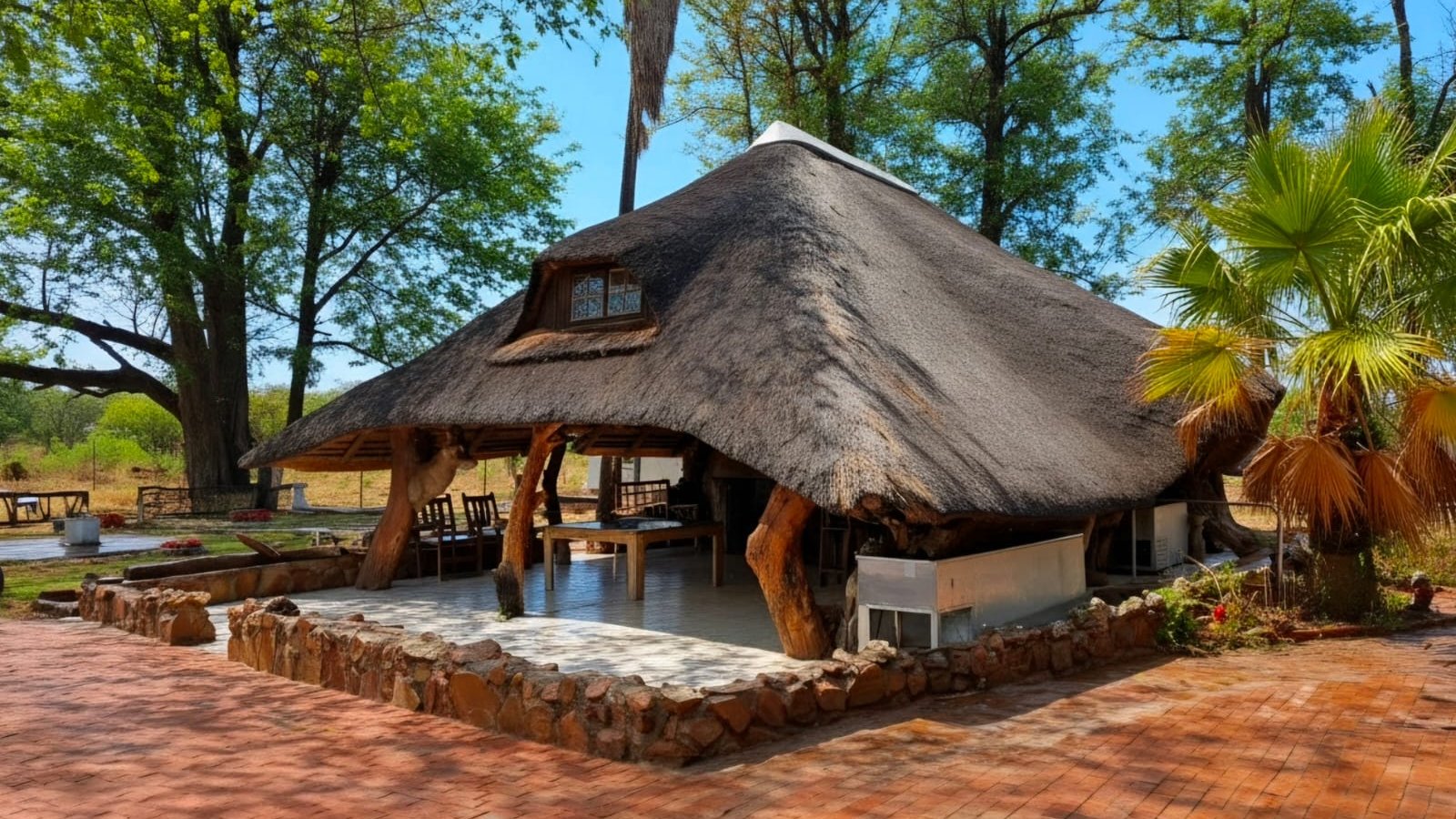
For sale through Africa Estate: an established lodge and cultural village in Gauteng's only Big 5 game reserve.
Buying from abroad? Read our guide to buying property in South Africa as a foreigner.
Louise Fourie is a PPRA registered property practitioner with Africa Estate Properties. 072 137 0897 | louise@africaestate.co.za
This guide is general information, not legal, tax or financial advice. Figures are as published by the sources below on the dates shown.
Sources
Pages opened 1 and 2 October 2026.
- Dinokeng Game Reserve and Visit us, fees from 1 July 2026
- Wikipedia, Dinokeng Game Reserve
- Mail & Guardian, From farmland to Big Five sanctuary, 4 July 2024
- Thorn Tree Bush Camp, 20 August 2025 (fenced areas, self-drive route)
- Tshikwalo Game Lodge, guide to the reserve and conservation fees
- Tourism Update, 25 September 2026
- The Presidency, 2 February 2026 and ATTA, 31 July 2026
- Property24, Dinokeng farms for sale and Private Property, Dinokeng
- LekkeSlaap, Kwalata Game Lodge and SA-Venues, Lesedi
- FNB Estate Agent Survey, third quarter 2026; Stats SA P6410, Tourist accommodation; IOL, 19 July 2026
Tags:dinokeng · game-reserve · big-five · lodges · gauteng · buyers · due-diligence
Share this article