By Willem van Schalkwyk | Farm agent, Africa Estate
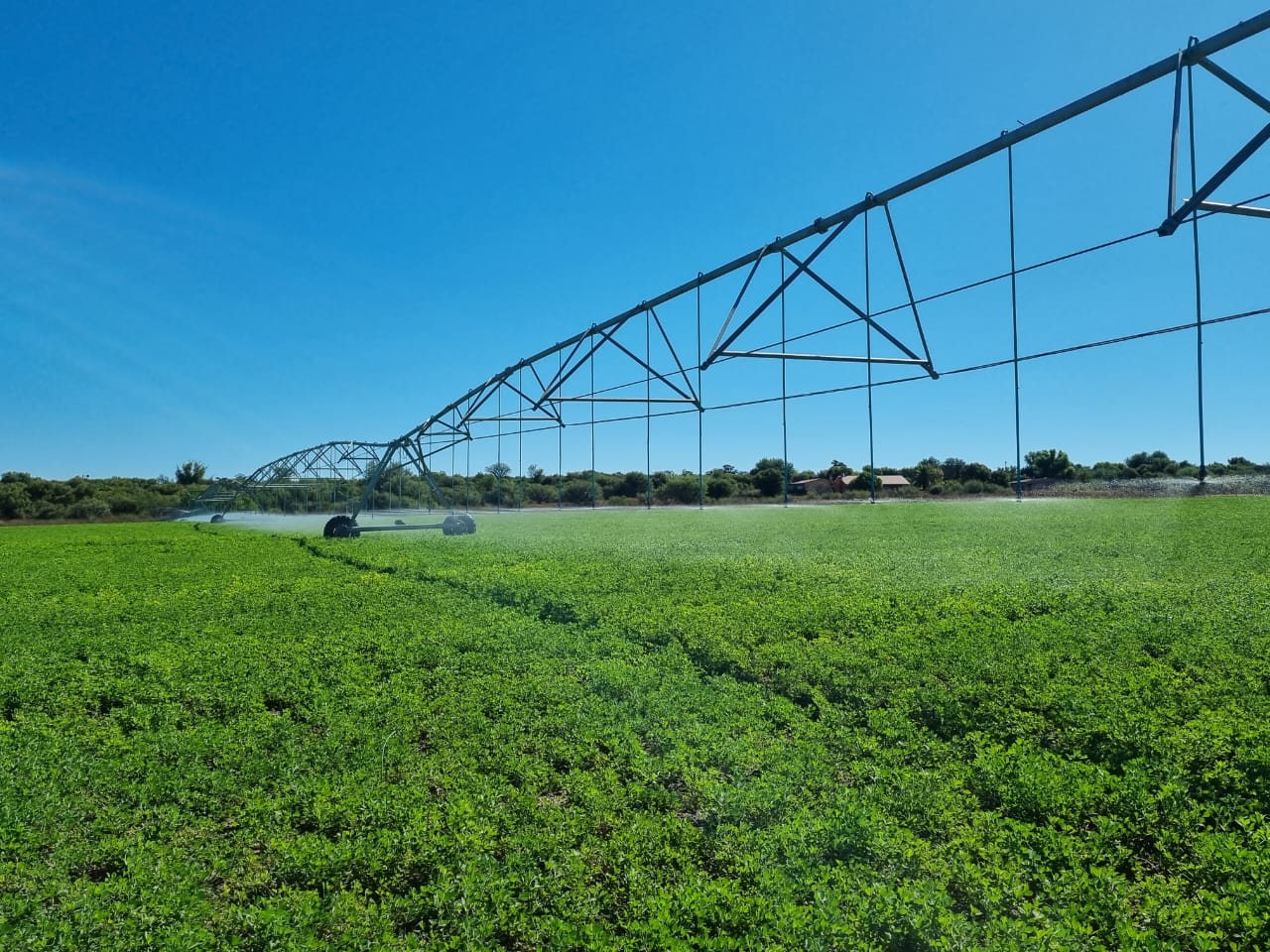
Green lucerne sells a farm quickly. But a photo of a pivot throwing water does not tell you how much water there really is, how old the pumps are, or what the power bill comes to every month. I farm lucerne, sheep and cattle near Jacobsdal myself, and these are the questions I would ask before I sign a sale agreement.
1. The water rights, on paper
The most important asset of an irrigation farm is not the pivot, it is the right to use water. Ask for proof of the registered water rights: for how many hectares, from which source, and under which scheme or water user association. Then compare that with how many hectares are actually under irrigation. If more land is being watered than the rights allow, that is a problem you buy with the farm.
2. The levies, and what is in arrears
Water rights come with levies. Ask for the annual amount and whether everything is paid up. Arrear levies are easy to miss during a viewing and unpleasant to discover later.
3. The pivots themselves
Ask how old each pivot is, when it was last serviced and whether the nozzles have been replaced. Walk the wheels and towers yourself. A pivot that cannot complete its circle will not give you the crop the price is based on.
4. Pumps, pipelines and power
Irrigation runs on electricity. Ask for a full year of power accounts, not just one month, and check whether the supply is large enough to run all the pumps at once. Solar or a generator changes the numbers, and belongs in the conversation.
5. The soil under the green
Not all soil takes irrigation equally well. Ask whether there are recent soil analyses, and look for patches where water stands or the lucerne is thinner. That shows drainage or salinity problems you will not see in a photo.
6. The age of the lucerne
Lucerne is not replanted every year, but it does not last forever either. Ask when each field was planted. A field that needs replanting soon is a cost that lands in your first year.
7. Yields in numbers, over more than one year
Ask for the records of cuts and bales per field, over three years if possible. One good season proves nothing. Records over several years show what the farm can really do.
8. The road to market
I ran trucks for many years, and this is something many buyers forget: lucerne has to reach the buyer. Check whether trucks can reach the sheds in a wet season, whether there is enough storage for bales, and how far the nearest buyers and main roads are. A good crop on a poor road costs you on every load.
Final word
An irrigated lucerne farm under pivots can be an excellent investment, but only if the water, the equipment and the numbers add up. Ask the questions before you buy, not after. If you are considering an irrigation farm in the Free State or Northern Cape, or want to sell one, talk to me.
Tags:lucerne · irrigation · centre-pivot · water-rights · buying-a-farm · free-state · northern-cape · jacobsdal
Share this article